
2025 Mercedes Benz GLE: Size Comparison to Other Luxury SUVs
November 17 2025,
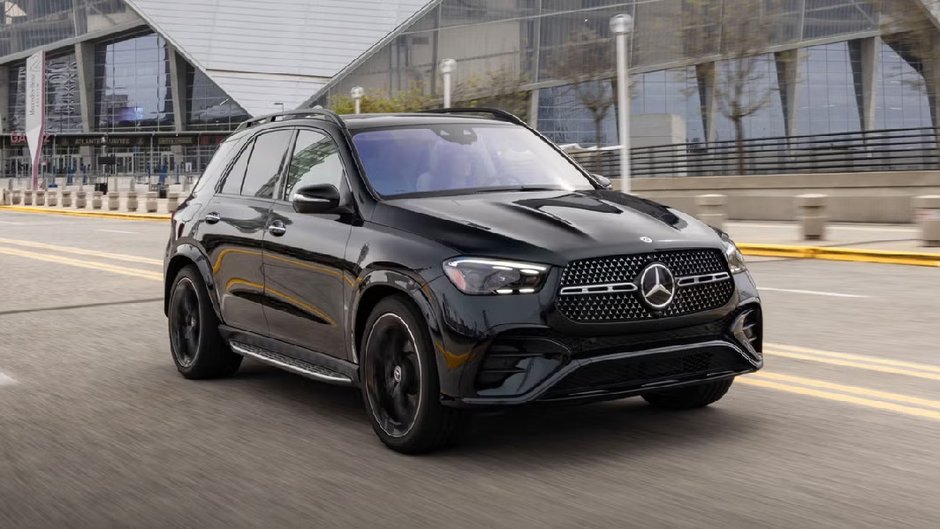
The Mercedes-Benz GLE represents a cornerstone of the luxury SUV market, offering a compelling blend of sophistication, technology, and versatility. As the midsize offering in the Mercedes-Benz SUV lineup, the GLE occupies a strategic position that balances substantial interior space with manageable exterior dimensions.
The GLE Position in Mercedes-Benz SUV Hierarchy
The Mercedes-Benz GLE is the brand’s midsize luxury SUV, positioned above the compact GLC and below the full-size GLS in the lineup. This strategic placement makes the GLE an ideal choice for buyers who find the GLC too constrained but don’t require the expansive dimensions of the GLS. It offers two distinct body styles: the traditional SUV configuration and the more style-focused Coupe, which sacrifices some practicality for a more dynamic silhouette.
Within the broader Mercedes-Benz SUV portfolio, the GLE represents a significant step up in size from the GLC while maintaining more manageable proportions than the flagship GLS. This positioning allows it to accommodate up to seven passengers with the optional third row, a feature that distinguishes it from the strictly five-passenger GLC while offering a more compact alternative to the GLS.
For the latest model year, the GLE continues with the design language and dimensional specifications introduced in the current generation, with subtle refinements that enhance its premium character without altering its fundamental proportions.
Exterior Dimensions and Proportions
The Mercedes-Benz GLE SUV presents substantial yet balanced exterior dimensions that communicate its premium positioning. The standard model measures 4,924 mm in length, 1,947 mm in width (excluding mirrors), and 1,772 mm in height. The GLE Coupe variant maintains similar length at 4,939 mm but features a slightly lower height of 1,730 mm due to its sloping roofline.
Both variants share a wheelbase of 2,995 mm, providing excellent stability and generous interior space. This wheelbase represents a 107 mm increase over the GLC’s 2,888 mm wheelbase, a difference that translates directly to enhanced rear-seat legroom and the possibility of accommodating an optional third row.
Ground clearance for the standard model with the base suspension system is 192 mm, providing sufficient clearance for light off-road excursions. Models equipped with the optional AIRMATIC air suspension can adjust their ride height by up to 80 mm, providing a maximum ground clearance of 242 mm when set to the highest off-road position—a feature particularly valuable for owners who venture beyond paved surfaces.
The proportions reflect the current Mercedes-Benz design philosophy, with relatively short front and rear overhangs that maximize interior space while maintaining balanced aesthetics. The front overhang measures 924 mm, while the rear extends 1,005 mm beyond the wheelbase, creating a visually balanced profile despite the vehicle’s substantial dimensions.
GLE Interior Space and Comfort
The cabin prioritizes passenger comfort with generous dimensions across all seating positions. Front occupants enjoy 1,025 mm of headroom in the standard SUV model, with the Coupe variant offering a slightly reduced measurement of 1,018 mm due to its more aggressive roofline. Legroom for front passengers is identical across both body styles at 1,051 mm, providing ample space for drivers of all statures.
Second-row accommodations remain impressive, with the standard GLE SUV offering 1,020 mm of headroom and 990 mm of legroom. The Coupe configuration reduces rear headroom to approximately 980 mm, a compromise made for its sportier aesthetic. Shoulder room remains generous in both variants, measuring 1,540 mm in the front and 1,520 mm in the rear, allowing comfortable seating for three adult passengers in the second row.
The optional third row, available exclusively in the standard SUV configuration, provides 910 mm of headroom and 850 mm of legroom. While these dimensions make the third row most suitable for children or smaller adults, they exceed those of many competitors in the midsize luxury SUV segment.
Interior width dimensions create a spacious cabin feeling, with 1,499 mm of hip room in the front and 1,482 mm in the rear, dimensions that compare favourably to competitors and contribute to the Mercedes-Benz reputation for passenger comfort.
Cargo Capacity and Versatility
Practical utility represents a key strength of the GLE, with cargo capacity that accommodates diverse lifestyle needs. The standard model offers 825 litres of cargo space behind the second row, providing substantial room for luggage, recreational equipment, or bulky items. With the second row folded, this capacity expands to an impressive 2,055 litres, creating a flat load floor that facilitates the transport of larger objects.
The GLE Coupe, with its distinctive sloping roofline, reduces this capacity to 655 litres behind the second row and 1,790 litres with seats down—reductions of 170 litres and 265 litres respectively compared to the standard model. These compromises reflect the Coupe’s prioritization of style over maximum utility.
Models equipped with the optional third row naturally see reduced cargo capacity when all seats are in use, offering approximately 320 litres behind the third row—sufficient for grocery bags or compact luggage but requiring seat folding for larger cargo needs.
The cargo area features a wide opening with a relatively low lift-over height of 760 mm, facilitating the loading of heavier items. The power liftgate comes standard across the GLE range, with the option of hands-free operation that allows access when arms are full.
Interior storage solutions include generous door pockets, a spacious center console, and thoughtfully placed smaller compartments throughout the cabin. The front center armrest conceals a deep storage bin, while rear passengers benefit from a fold-down center armrest with integrated cupholders.
Comparative Analysis with Other Mercedes-Benz SUVs
When positioned within the broader Mercedes-Benz SUV lineup, the GLE dimensions reveal its carefully considered placement. The GLC, as the next step down in the hierarchy, measures 4,717 mm in length, 1,890 mm in width, and 1,640 mm in height, with a wheelbase of 2,888 mm. These differences—207 mm less length, 57 mm less width, and 132 mm less height—create a vehicle that’s noticeably more compact than the GLE while still offering reasonable interior space for five passengers.
The flagship GLS expands significantly from the GLE dimensions, measuring 5,207 mm in length, 1,956 mm in width, and 1,823 mm in height, with a wheelbase of 3,135 mm. These increases—283 mm in length, 9 mm in width, 51 mm in height, and 140 mm in wheelbase—enable the GLS to offer genuine three-row comfort for adult passengers, a capability that the optional third row can’t fully match.
In terms of cargo capacity, the progression is equally clear: the GLC offers 620 litres behind its second row, the GLE provides 825 litres, and the GLS expands to 890 litres behind its second row (or 355 litres with all three rows in use). Maximum cargo volumes with seats folded follow a similar pattern: 1,680 litres for the GLC, 2,055 litres for the GLE, and 2,400 litres for the GLS.
These dimensional differences position the GLE as a true midsize offering, providing substantially more space than the compact GLC while remaining more manageable than the full-size GLS—a balance that appeals to many luxury SUV buyers.
GLE Coupe vs. Standard GLE Dimensional Differences
The GLE Coupe offers a stylistic alternative to the standard SUV, with several key dimensional differences that influence both aesthetics and practicality. While sharing the same wheelbase of 2,995 mm, the Coupe is slightly longer at 4,939 mm compared to the standard model’s 4,924 mm, a difference of 15 mm due to its unique rear design.
Height represents the most significant dimensional distinction, with the Coupe standing 1,730 mm tall compared to the standard 1,772 mm. This 42 mm reduction results from the Coupe’s dramatically sloping roofline, which begins its descent earlier and continues more aggressively toward the rear of the vehicle.
The practical implications of these differences manifest primarily in rear headroom and cargo capacity. Rear passengers in the Coupe have approximately 40 mm less headroom than in the standard model, a difference that may be noticeable for taller occupants. Cargo capacity sees a more substantial reduction, with the Coupe offering 655 litres behind the second row compared to the standard 825 litres—a decrease of 170 litres or approximately 21%.
With rear seats folded, the maximum cargo capacity difference becomes even more pronounced, with the Coupe providing 1,790 litres versus the standard model’s 2,055 litres—a reduction of 265 litres or 13%. This compromise reflects the Coupe’s prioritization of dynamic styling over maximum utility, appealing to buyers who value distinctive aesthetics and are willing to sacrifice some practicality.
Another key distinction is the unavailability of a third-row seating option in the Coupe, limiting its passenger capacity to five occupants compared to the potential seven-passenger configuration of the standard model.
Performance-Oriented AMG Variants Dimensional Considerations
The Mercedes-AMG GLE 53 and GLE 63 models feature several dimensional modifications that support their performance-oriented character. These high-performance variants typically stand out with wider body treatments, measuring up to 1,980 mm in width compared to the standard model’s 1,947 mm—an increase of 33 mm that enhances stability during dynamic driving.
Track width increases correspondingly, with the AMG models featuring wider front and rear tracks to accommodate larger wheels and tires. The standard tire configuration for the AMG GLE 53 includes 275/45R21 front and 315/40R21 rear tires, while the more powerful GLE 63 can be equipped with 285/40R22 front and 325/35R22 rear tires. These wider, lower-profile tires contribute to the AMG variants’ more aggressive stance and enhanced cornering capabilities.
Ride height is typically reduced by approximately 15 mm in AMG models equipped with the standard sport suspension, lowering the center of gravity to improve handling characteristics. Models with the AMG RIDE CONTROL+ air suspension can adjust their ride height based on driving mode, offering a range of approximately 60 mm from the lowest to highest settings.
Interior dimensions remain largely consistent with the standard models, though the AMG variants often feature more aggressively bolstered sport seats that may slightly reduce measured hip room. Cargo capacity specifications remain unchanged from their respective body styles, with the AMG SUV offering the same 825 litres and the AMG Coupe providing 655 litres behind the second row.
Practical Implications of GLE Dimensions
The dimensions translate to several practical advantages in daily use. Its substantial size provides commanding road presence and excellent driver visibility, while maintaining manageable proportions for urban environments. The turning circle of approximately 12.0 metres, while larger than compact vehicles, remains reasonable for a midsize luxury SUV.
Parking dimensions require consideration, with the width of 1,947 mm (excluding mirrors) approaching the limits of standard parking spaces in some facilities. The vehicle’s height of 1,772 mm allows access to most indoor parking structures with typical clearance restrictions, though drivers should verify clearance when equipped with roof accessories.
For families, the rear door openings provide generous access for installing child seats, with ISOFIX anchor points easily accessible. The rear seat dimensions easily accommodate even bulky rear-facing child seats without requiring front seats to be moved excessively forward, maintaining comfort for front passengers.
The cargo area dimensions prove practical for diverse scenarios, with the 825-litre capacity easily accommodating multiple large suitcases or recreational equipment. The square-shaped cargo area maximizes usable space, while the wide opening makes loading larger items easier.
For outdoor enthusiasts, the towing capacity of up to 3,500 kg (when properly equipped) provides substantial capability for towing boats, camping trailers, or utility trailers, enhancing its versatility beyond passenger and cargo transportation.
5 Facts About the 2025 Mercedes-Benz GLE Dimensions
- The wheelbase of 2,995 mm is precisely 80 mm longer than its predecessor from the previous generation, a change that directly contributed to the possibility of offering a third-row seating option for the first time in this model line.
- Despite being 283 mm shorter in overall length than the GLS, the second-row legroom is only 15 mm less, demonstrating how efficiently Mercedes-Benz has utilized the GLE interior space.
- The Coupe roofline is 42 mm lower than the standard model, yet engineers managed to limit the rear headroom reduction to just 40 mm through clever seat positioning and floor stamping techniques.
- The AMG 63 massive 325 mm wide rear tires create a contact patch with the road that’s approximately 30% larger than the standard model tires, significantly enhancing traction during acceleration and cornering.
- When equipped with the optional AIRMATIC suspension and set to its highest off-road position, the ground clearance of 242 mm exceeds that of many dedicated off-road vehicles, despite its luxury positioning.
Common Questions About 2025 Mercedes-Benz GLE Dimensions
How comfortable is the optional third row in the GLE for adult passengers?
- The optional third row offers 910 mm of headroom and 850 mm of legroom, dimensions that make it suitable for adults of average height on shorter journeys. However, for extended travel, adults over 175 cm tall may find the space somewhat constrained. The third row is ideally suited for children and teenagers, who will find the accommodations quite comfortable even on longer trips. Access to the third row is facilitated by second-row seats that slide and tilt forward, though entry and exit require some agility compared to larger three-row SUVs.
Does the GLE Coupe significantly compromise practicality compared to the standard model?
- The Coupe reduces cargo capacity by 170 litres (21%) behind the second row compared to the standard model, a noticeable but not dramatic difference for most users. The more significant compromises include a 40 mm reduction in rear headroom, which may affect comfort for taller passengers, and the absence of the third-row seating option. For buyers who prioritize style and rarely need maximum cargo capacity or additional seating, these compromises may be acceptable. However, families requiring maximum versatility will likely prefer the standard model configuration.
How does the GLE size compare to the previous generation model?
- The current platform, which continues for 2025, grew significantly compared to its predecessor. The wheelbase increased by 80 mm (from 2,915 mm to 2,995 mm), while overall length expanded by 105 mm (from 4,819 mm to 4,924 mm). Width increased by 12 mm, and height by 24 mm. These dimensional increases translated directly to enhanced interior space, with rear legroom improving by 69 mm and cargo capacity expanding by 125 litres behind the second row. The larger dimensions also enabled the addition of the optional third row, a feature not available in previous generations.
Which GLE model offers the best balance between size and maneuverability?
- The standard 350 4MATIC provides the optimal balance, offering full cargo capacity and passenger space while maintaining the same turning circle as other non-AMG variants. The AMG models, while featuring wider tires and bodies, require only marginally more space for maneuvering, with the performance benefits potentially outweighing these minor compromises for enthusiast drivers. For those prioritizing urban maneuverability, avoiding the optional 22-inch wheels can provide a slightly tighter turning radius, though the difference is minimal in everyday driving situations.
How does cargo capacity change when the third-row seats are installed and in use?
- When equipped with the optional third row and with all seats in use, the GLE cargo capacity reduces to approximately 320 litres—sufficient for several soft bags or a modest grocery run, but limited for larger items or multiple suitcases. With the third row folded flat, cargo capacity returns to the standard 825 litres, identical to models without the third-row option. This configuration offers excellent flexibility, allowing owners to prioritize either passenger capacity or cargo space as needed for specific journeys.
*Disclaimer: Content contained in this post is for informational purposes only and may include features and options from US or international models. Please contact the dealership for more information or to confirm vehicle, feature availability.*